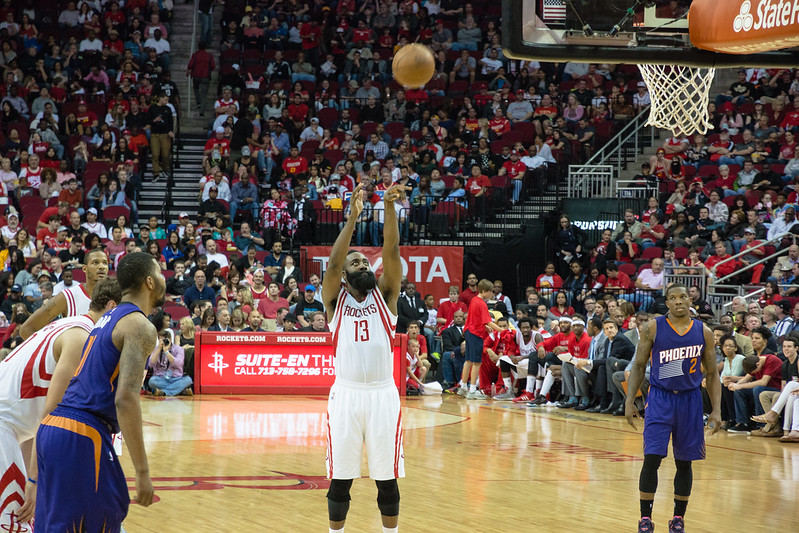
The NBA is always changing, always evolving, as teams find new ways to win. They forge into the unknown in search of some competitive advantage that they hope will bring them to the forefront of the league. Over the past decade NBA teams have changed in two notable ways. First, the three-point shot has become extremely valuable, because well, three is more than two, but also because it’s a much more efficient shot than the once beloved post-up or mid-range options. Secondly, the NBA has become increasingly position-less. Initially there were five positions: point guard, shooting guard, small forward, power forward and center. Each came with specific roles to play that defined the position, and each was usually demarcated by height.
However, today’s NBA has brought about Lebron James, Ben Simmons, Nikola Jokic, Giannis Antetokounmpo, etc. What these players have in common is that they all physically fit in the position of forward or center but take on primary ball handling and scoring roles that would usually be designated to a guard. While not everyone has a player of that caliber, as they are quite unique, the mucking up of traditional positions has begun. The combination of these two changes has led to the rise of an NBA trend dubbed “small ball”.
Small ball has come about due to an increased emphasis on taking efficient shots, three-pointers for example, and a need to defend those shots. Taller players are typically predisposed to posting up close to the basket, using a combination of strength and footwork to score. However, this type of shot just isn’t an efficient way to score for most players. What’s worse for big men, is that they statistically don’t shoot the three as well as their shorter teammates. This leaves the traditional big man to serve as a rebounder and rim protector. Even then a problem can arise.
Most taller players aren’t as agile as their shorter counterparts, which means they have a hard time defending on the perimeter, and with the proliferation of threes, they’re asked to do so more often than ever before. As a result, NBA teams sometimes chose to play small ball lineups that consist of players who are better shooters and/or perimeter defenders. This means that players who would traditionally be classified as forwards, serve as the center while taking on a mix of both roles. Of course, this has its downsides, when playing a smaller lineup, a team’s lack of size can limit their ability to protect the rim and rebound the ball. This is why most teams only chose to implement small ball in doses. Notice how I said most? Well, that’s cause the Houston Rockets are the exception.
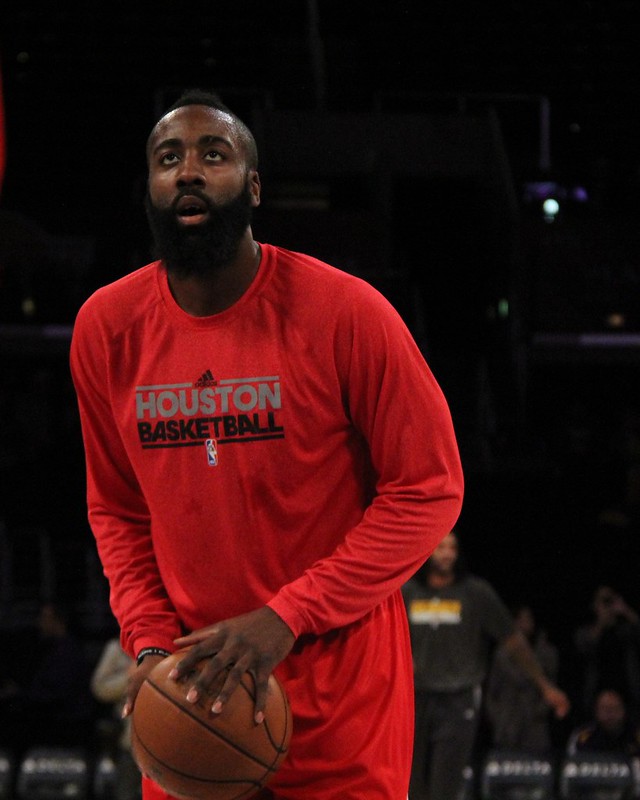
Houston has a history of extremism under head coach Mike D’Antoni. D’Antoni wanted to maximize Houston’s offensive efficiency by eliminating the mid-range shot. As a result, the Rockets have led the league in three-point attempts every year since D’Antoni’s arrival. James Harden, the team’s franchise star, has also led the league in isolation plays every year since D’Antoni was put in charge. Thus, it seems fitting that the Rockets are the team to take small ball to the next level.
Over the offseason, the Rockets traded for All-Star guard Russell Westbrook, a longtime friend and former teammate of James Harden. The two played for the Oklahoma City Thunder at the start of their careers, Westbrook was a starter while Harden was the sixth man. Eventually Harden was traded to the Houston Rockets and became the face of the franchise. Now the two friends would be on the same team once again, but with Harden in a more prominent role. The fit was questionable, as both are better with the ball their hands, but that was besides the point. Talent is talent, and since both players have MVP awards on their resume, that’s about as much talent as you can get.
Initially, the team tried to integrate Westbrook into their system, forcing him to jack up treys and spend less time as the primary dribbler. It wasn’t very successful; Westbrook has always shot poorly from distance which in turn makes him less of an off-ball threat. Adding Westbrook’s shooting prowess (or lack thereof) to a lineup that already featured traditional big man Clint Capela, achieved the exact opposite of what Mike D’Antoni wanted out of his offense. There were two non-shooters on the court, and that was a problem. Not to mention Capela’s presence in the paint clogged up driving lanes for Westbrook, who is at his most efficient when he attacks the basket. The talent was there for Houston, they just weren’t using it right. The early fit between Harden and Westbrook proved clunky at best. Something had to change.
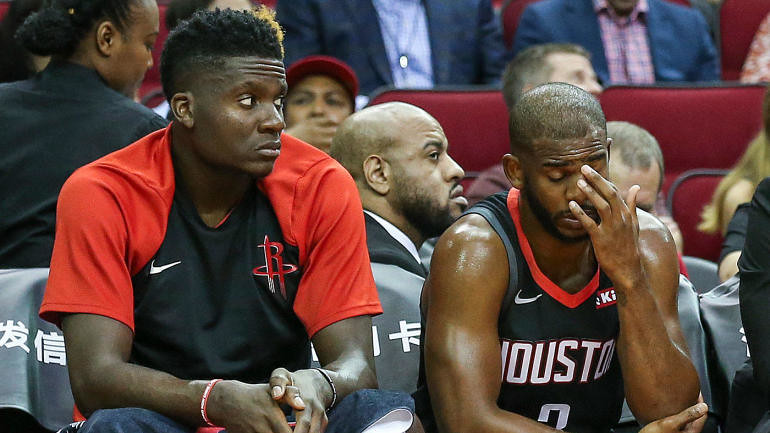
Capela had been dealing with a lot of injuries this season, forcing Houston to turn to small ball more often than it initially intended. However, Capela’s absence allowed Houston to see what Westbrook could do with space in the paint. Having Capela out meant that there was only one non-shooter on the court, Westbrook, but his All-Star ability to score in other ways mitigated his inability to hit from deep. His drives became more efficient, and his scoring numbers went up. With this in mind, the Rockets devised a plan to get the most out of their MVP duo.
On February 4th, the Houston Rockets traded Clint Capela in a four-team deal that landed them 3-and-D wing Robert Covington. Trading their center was a sign that Houston was all in on playing small ball full time. The idea was simple. Surround Westbrook and Harden with shooters that will allow them to drive to the basket and kick out if necessary. That way it doesn’t matter who they kick out to, because everyone who gets minutes can shoot. Except Westbrook of course, but more often than not he’d be the one driving. This five-out approach gives Westbrook and Harden all the space their heart desires, allowing the dynamic duo to pick apart defenses at their disposal. When it comes to who gets the ball between Harden and Westbrook, it’s just a matter of feeding the hot hand, as both are MVPs, and either could go off on a given night. What’s even better for Houston is when they both catch fire.
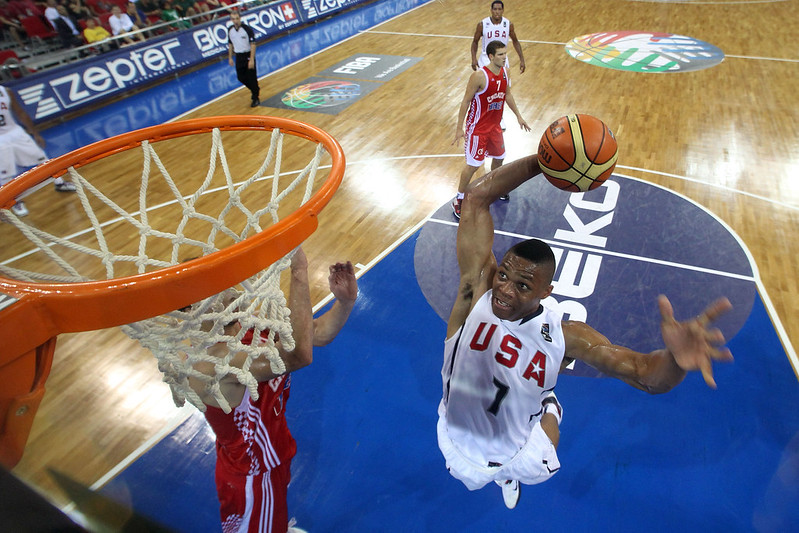
As I mentioned before, there are downsides to playing this way. The Rockets are the only team taking small ball to this length, which means they still play bigger teams with more traditional centers. Houston’s answer to that issue was to stockpile taller wings, like Covington, who would traditionally be classified as small or power forwards and have them soak up “center” minutes. One player in particular is the reason why the small ball system has worked so far. That player would be P.J. Tucker.
Tucker has a reputation for being a “blue collar” NBA player, a kind of guy who’ll do all the dirty work in order to help his team win. That means Tucker usually defends the oppositions best offensive player, sets screens, and grabs rebounds. Offensively, he takes a back seat and usually waits for Harden or Westbrook to kick out to him for three. His role in the Rockets new system asks him to do a couple of other things. Tucker serves as Houston’s center most of the time he’s on the court, so instead of guarding the best offensive player he’s now tasked with guarding the oppositions big man. There’s also more of an emphasis on him rebounding the ball. Tucker is only 6’5”, most centers fall in the seven-foot range, this might be a problem for some, but Tucker is a gritty player who has shown a willingness to take on the challenge.
Houston isn’t making Tucker do it all on his own though. The Rockets switch a lot on defense, which means anyone has the potential to guard anyone. Yes, even James Harden, whose past defensive woes have become meme worthy. Though, this year Harden has shown some defensive improvement, his stocky frame actually makes him a decent post defender. In fact, the general stockiness of the Houston Rockets as a team allows everyone to at least have a chance when it comes to defending in the paint. Not to mention the frequency at which Houston switches on defense keeps everyone engaged, mix that with a greater emphasis on team rebounding, and every Rocket is sure to stay locked in throughout the course of a game. That may not seem like an issue, but with Harden and Westbrook running so many isolation plays, it can be easy for everyone else on the court to get a little weary-eyed.
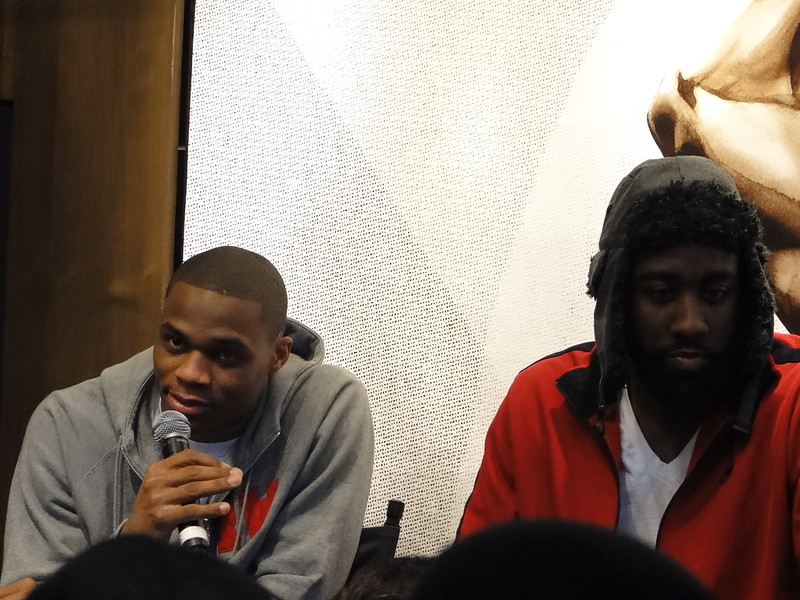
Since February 4th, when the team acquired Covington and fully implemented small ball, the Houston Rockets are 7-3. Their notable wins come against the super-sized Lakers, Utah Jazz home of the stifle tower, and Boston Celtics (twice). Over the 10-game stretch Westbrook is averaging 33.6 points, 5.5 assists and 7.6 rebounds per game. What really matters though is that his field goal percentage has jumped up to 56.3%, a considerable leap compared to his season long average of 47.3%. All of Harden’s general numbers have gone down slightly in that same time frame, but he’s also turning the ball over less, going from 4.4 turnovers per game to averaging 3.8 giveaways in the last 10. Harden’s numbers taking a slight dive was expected anyway, it was the only way to achieve a nice balance with Westbrook.
Ten games is a small sample size, and it is reasonable to doubt the longevity of such a style of play, especially when looking towards the postseason. Afterall, the Rockets have lost the rebounding battle in every game since the experiment’s commencement. What Houston is betting on though is that talent will win out. At times in the playoffs you just need a guy who can go get a bucket, the Rockets have two MVPs who can do just that. They’ve effectively optimized their situation to best suit their stars and are hoping that their potent offense offsets a lack of rebounding and defensive ability. It is quite the gamble, but one has to respect that the Rockets are really going all in on their title chase. I suppose we’ll just have to wait and see if it pays off.
 XDog's Sports Blog
2 thoughts on “The NBA’s Most Daring Experiment: The Houston Rockets”